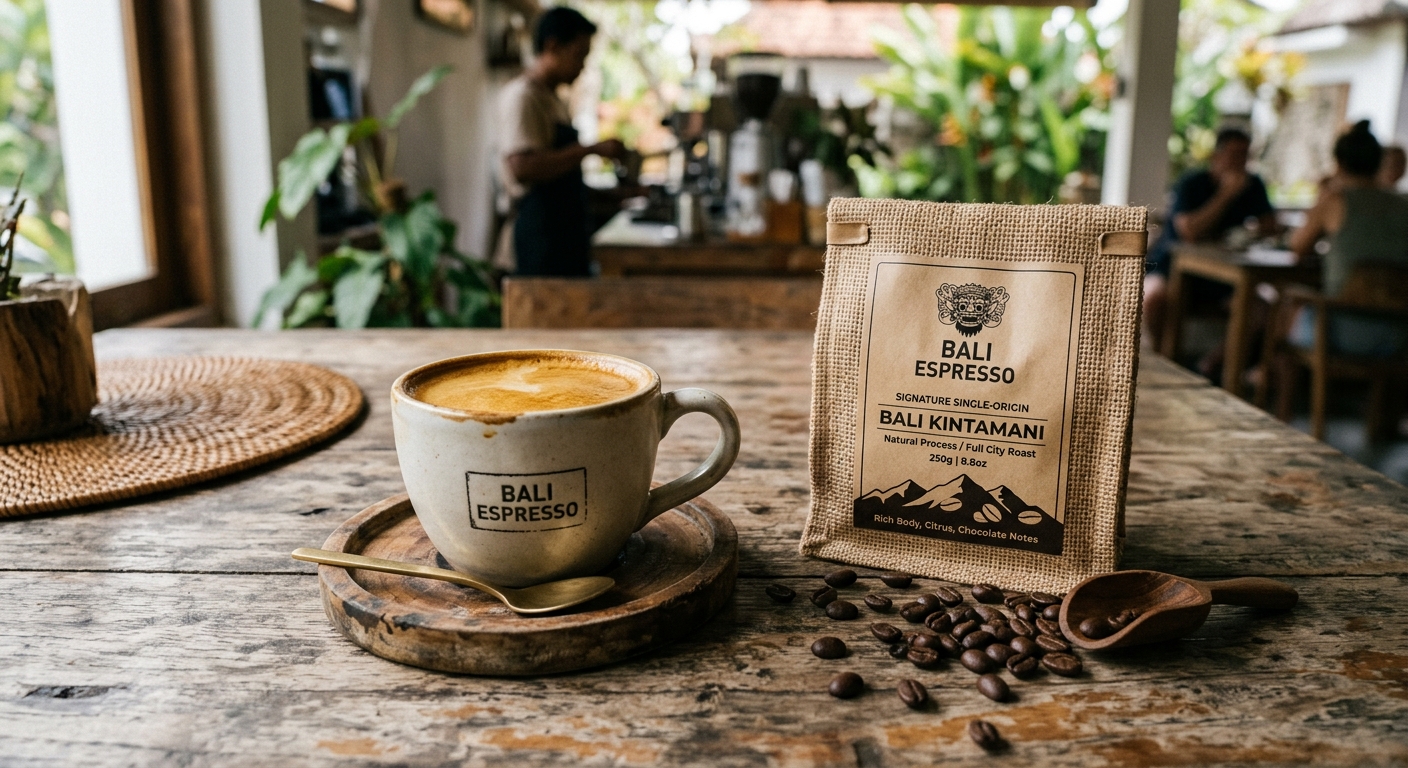
Every harvest is a new build. The green coffee that landed from Kintamani this July came in noticeably denser than last season's lot - higher grown, slower matured, and holding more moisture at intake. Running last year's roast curve on it would have under-developed the center of the bean and left a grassy edge on the finish. So we recompiled.
The headline change is charge temperature. We dropped the drum charge by 8°C and extended the drying phase by roughly forty seconds before first crack. On a denser bean that extra drying window lets heat reach the core without scorching the surface - the difference between a clean, syrupy cup and one that reads flat and papery.
The second change is where we pull it. Kintamani v3.0 finished about fifteen seconds into a rolling first crack. v3.1 stops earlier, right at the front edge of the crack. That shift keeps the black-cherry acidity we love and stops the roast from tipping into the generic dark-roast bitterness that hides everything a volcanic washed coffee has to say.
What does that mean in the cup? Brighter, cleaner, and more obviously fruit-forward than the last batch, with the dark-chocolate base still anchoring the body. On a pour-over you will notice the cherry note arrive first and the spice land on the finish. On espresso it pulls a touch faster, so if you run NEO-KINTAMANI on bar, tighten your grind by a notch and re-check your shot time.
This is the whole point of roasting to order instead of buying a static blend: the coffee is a living input, and the profile has to move with it. Every bag of v3.1 carries its roast date on the seal. If you are a wholesale partner, your next standing delivery is already on the new curve - and if the shot feels different on your bar, that is expected. Reach out and we will re-dial with you.
